Whale conservation and responsible whale watching


Why Whales Matter
Whales aren't just charismatic megafauna worth protecting - they are keystone species that are integral to ocean health, and their decline reverberates through the entire marine ecosystem in ways we are only beginning to fully understand.
Take the "whale pump." As whales move vertically through the water column, their nutrient-rich excrement catalyses the growth of phytoplankton, thereby increasing CO2 capture from the atmosphere while also producing oxygen through photosynthesis. When whales die, their bodies sink to the ocean floor, carrying their stored carbon with them. A single great whale, over its lifetime, stores an average of 33 tons of carbon — far more than a mature oak tree.
Researchers at the IMF argue that if whale populations recovered to pre-whaling numbers of around 4 to 5 million, they would capture 1.7 billion tons of CO2 annually. Instead, the mass slaughter of the 19th and 20th centuries — in which three million cetaceans (c.90%) were killed — may have actively accelerated climate change by reducing the ocean's capacity to lock carbon back in.
As keystone species, the effects of losing whales cascade outward in ways that go far beyond carbon. Fewer whales means less fertilisation of phytoplankton, which means less oxygen production, less prey for fish, and less food for the seabirds, sharks, and marine mammals that depend on those fish. With fewer whales, nutrient cycling diminishes, leading to reduced phytoplankton growth, and phytoplankton are responsible for the majority of photosynthesis on Earth. The collapse of one species quietly hollows out the system underneath it.
And now, the threats are compounding. Rising ocean temperatures are depriving zooplankton of their primary food source, while ocean acidification is disrupting whales' ability to communicate — a faculty they rely on for hunting, navigation, and finding mates, across distances of hundreds of kilometres. Industrial-scale krill fishing in the high seas, especially near Antarctica, is pushing whale populations closer to the brink, as krill are a vital food source for whales.
Whale Watching Tourism - A vital source for conservation funding
Whilst some countries - Iceland, Japan and Norway - are still holding on to the sunset industry of whaling, whale watching has become a significant global industry. It's a $2.9 billion-a-year activity available in over 120 countries, engaging more than 14 million people and employing over 13,000 people. When done well, it's one of the most powerful tools conservation has.
But the picture isn't uniformly rosy. When poorly managed, whale and dolphin watching tourism, in all its forms, can negatively impact cetaceans, compromising welfare and potentially even causing population declines and injuries due to boat strikes. Most operators remain more interested in profits, with the resulting nuisances including overcrowding, noise pollution, and harassment of cetaceans. A boat chasing a pod of dolphins for a better photo opportunity isn't ecotourism. It's harassment with a nature label slapped on it.
This is where global governance matters. The International Whaling Commission first recognised the potential impact of whale watching as far back as 1975, eventually developing guidelines in 1996 that include limits on vessel numbers, speeds, approach distances, and time spent with animals.
What Responsible Whale Watching Actually Looks Like
There are many national and international guidelines for whale watching, as well as different certifications a tour operator can obtain. They largely follow the guidelines below as set out by the World Cetacean Alliance (WCA):
- Welfare: cetaceans are respected as wild animals, and their space, approach, and time spent with them are carefully managed
- Respect: the wider marine environment is also considered
- Conservation: tours actively contribute to the health of ocean ecosystems and local communities.
On the flip side, the WCA is also clear about what irresponsible watching looks like. Tourism practices that disturb, harass, or endanger dolphins, whales, and other marine mammals during viewing activities can include chasing, crowding, loud noises, and unsafe boat manoeuvres that disrupt their natural behaviours, pose risks to their health, or threaten their environment.
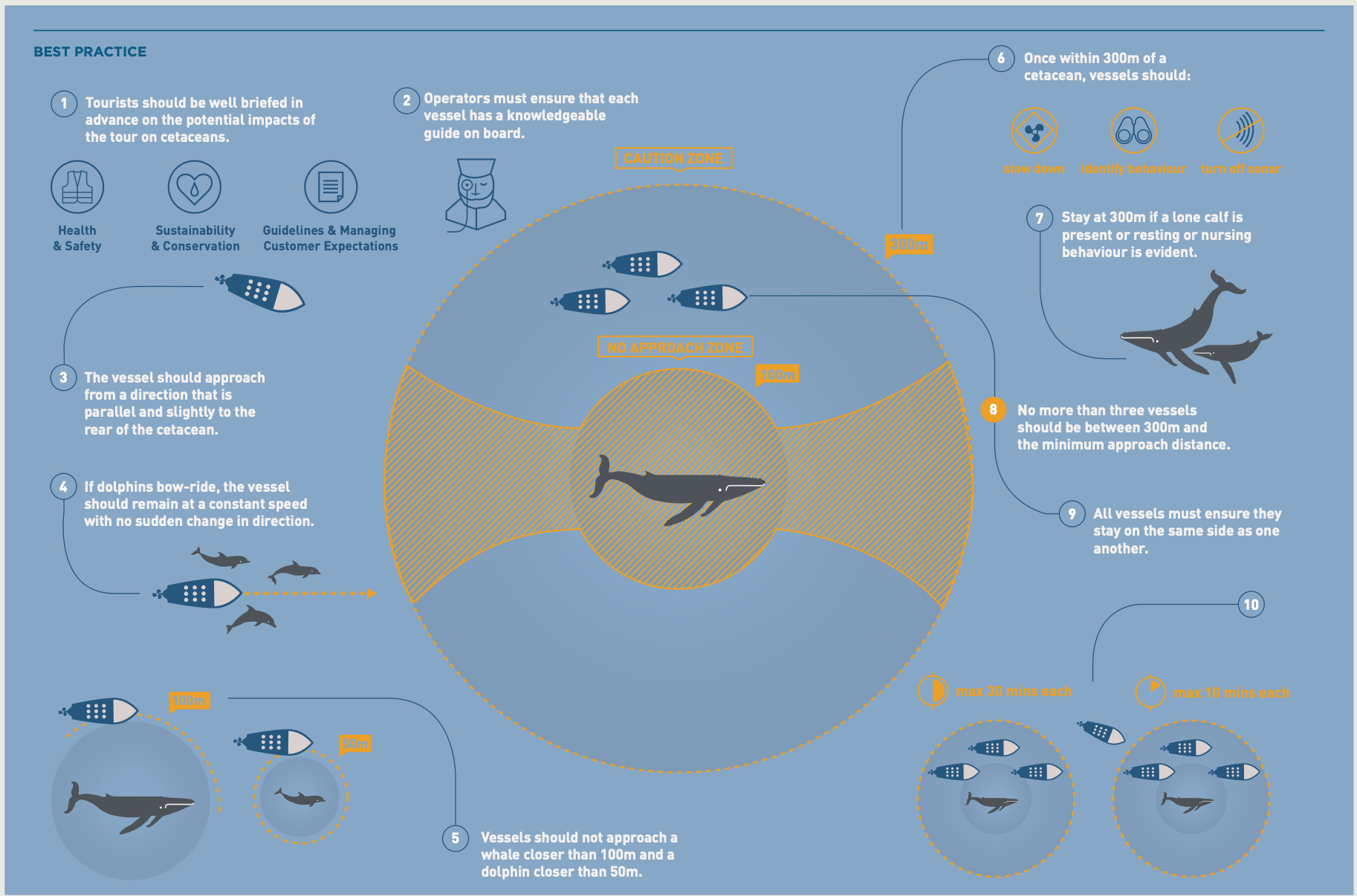
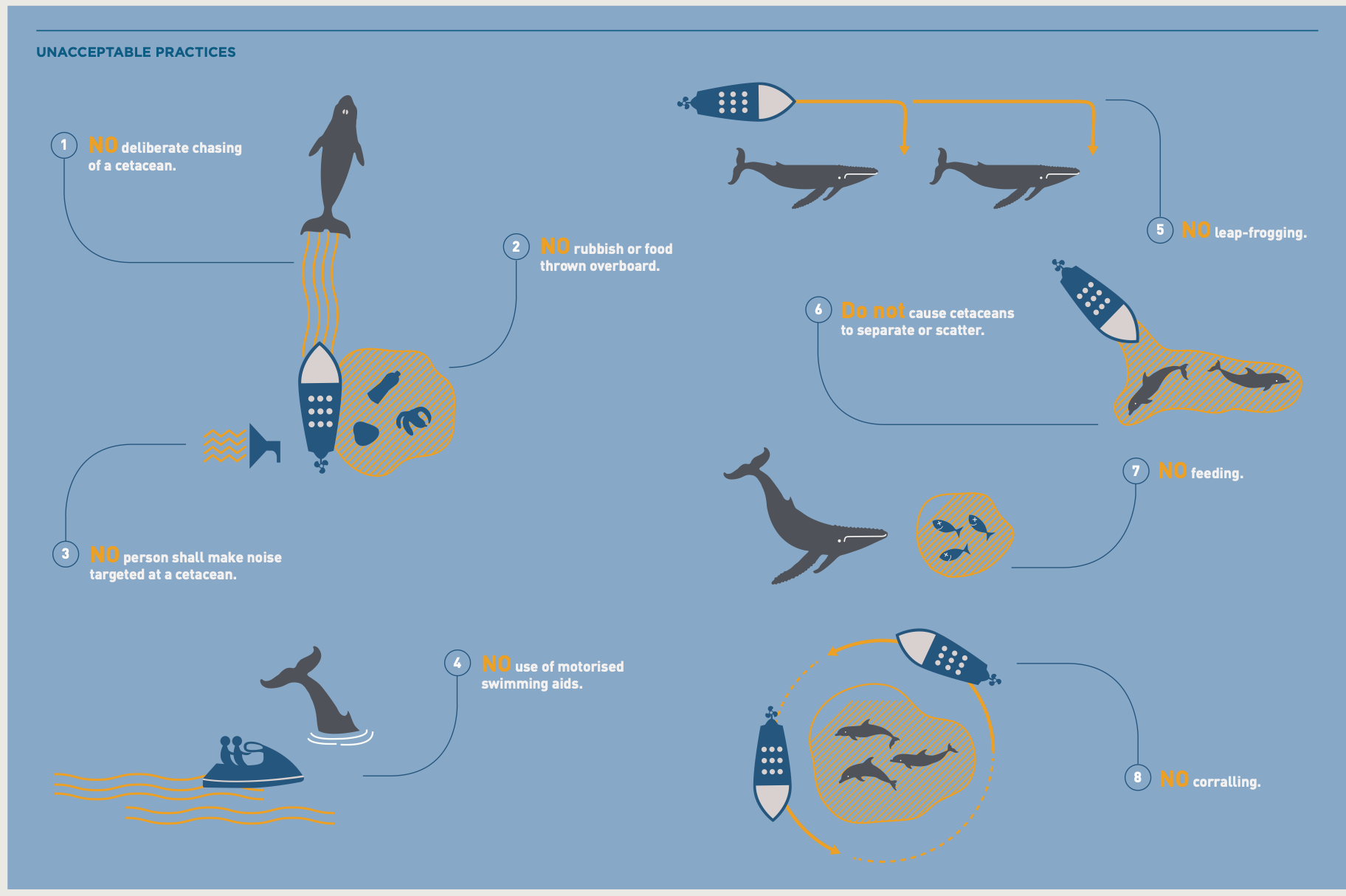
So when going on a whale watching tour, look out for whether the operator guarantees you sightings, or if they respect wildlife, and see themselves as guests in the ocean only.