Beyond megacities and the tourist trail: China travel guide 🇨🇳
Beyond Beijing and Shanghai lies a different China. Our travel guide traces under-discovered regions, natural wonders, unique wildlife, and diverse cultural heritages — plus tips on visas, payments, trains and more.


Planning a trip to China — whether a self-guided adventure, a group tour, or a tailor-made travel package — can feel overwhelming. The country is enormous, the regions are wildly varied, the language is difficult and English signs can be a hit or miss, and its own tech and payment system can be confusing for travellers. But China is also an easy destination to travel to - it is very safe, the transport is reliable and fast, and the people are friendly. This guide is designed to help you cut through the noise: what you actually need to know before you go, which regions are worth your time beyond the hyped routes, and how to make your China holiday feel like an adventure - the good kind.
Good things to know before you go
Visas
China has a unilateral visa-free policy for over 43 countries. Most recently, UK and Canadian travellers, joining those from the EU, can visit the country visa-free for 30 days. As visa rules can change overtime, please check the latest info before your trip.
Currency and payments
The currency is Chinese Yuan (RMB). China is largely cashless, and this has been the case since around 2017. Even in rural areas - from the roadside restaurants to bazaars - you can pay using Alipay or WeChat. It is often the preferred payment method for many merchants. Visa and Master cards are not widely accepted, especially outside the big cities such as Beijing and Shanghai. This is because the domestic payment system is fast and convenient, and many merchants do not have the incentive to incur extra cost to accept Visa/master cards.
AliPay and WeChat Pay can be done through QR codes or by tapping on a card reader - similar to contactless payment. For foreign visitors, AliPay is the easier of the two to set up — it accepts international bank cards and can be configured before you travel. WeChat requires verification by a Chinese national. Do carry some cash if you're heading into deep rural areas where the signal can be unreliable.
Getting a SIM card
Pick up a local SIM on arrival is highly recommended, as some Chinese apps will send you a verification code when setting up, or your taxi driver may want to call you when they come to pick you up. A foreign mobile number can't always receive local texts.
Apps you'll need
China runs on its own technology ecosystem. Even with VPN, local apps, such as Amap, tend to be more accurate than Google Maps. Download these before you go:
- Payment: AliPay
- Taxi: Didi (China equivalent of Uber or Grab)
- Map: Amap, or Gaode map
- Takaways, booking establishments such as spas and restaurants: Meituan
Trains
China's high-speed rail network is one of the best in the world, and for many routes it's the fastest and most comfortable option. Tickets are linked to your passport number, and you won't even need to collect tickets - just scan your passport at the gate. In some areas, passport-holders may need to go through a manual-check lane, but this will always be signposted.
Booking train tickets in advance is strongly recommended, especially around peak holiday seasons or for popular routes. The two main booking options for international travellers are the 12306 app (the official platform) or third-party platforms like Trip.com. Tickets often open about one month before departure time.
Domestic flights
Domestic flights are safe and reliable. Please note that many major Chinese cities can have different airports, sometimes one for international flights and one for domestic flights. Check the airport for your domestic flights, as it may be different from the one you landed at.
When to go — and when not to
Avoid the two national Golden Week holidays if at all possible: 1–7 May and 1–7 October. Domestic travel during these periods is enormous in scale — popular attractions can become unpleasant, train tickets and hotels sell out months in advance, and prices spike. The weeks on either side are considerably calmer. Recently, the week of Spring Festival, which changes every year based on the lunar calendar, has also become a peak domestic travel season.
Summer in many parts of China can be very hot, with temperatures regularly reaching the high 30s to 40s. So if you plan to do a lot of city walking, or want to ascend the Great Wall, it is wise to avoid sweltering hot summer days.
Tipping
Tipping is not expected. You don't need to tip in restaurants, taxis, or hotels. However, if you join a personalised holiday with a guide, you can tip your guide for good services.
Regions: where to go in China
Most first-time visitors follow the classic itinerary: Beijing → Xi'an → Chongqing → Shanghai. These are well-trodden routes for a reason, but they represent a narrow slice of what China actually is, and in our opinion, too mega-city focused. China is not widely considered a nature or wildlife destination, but that image couldn't be further from the truth. Here, we provide a brief regional snapshot and highlight some of the great nature and wildlife experiences in this vast country.
Beijing
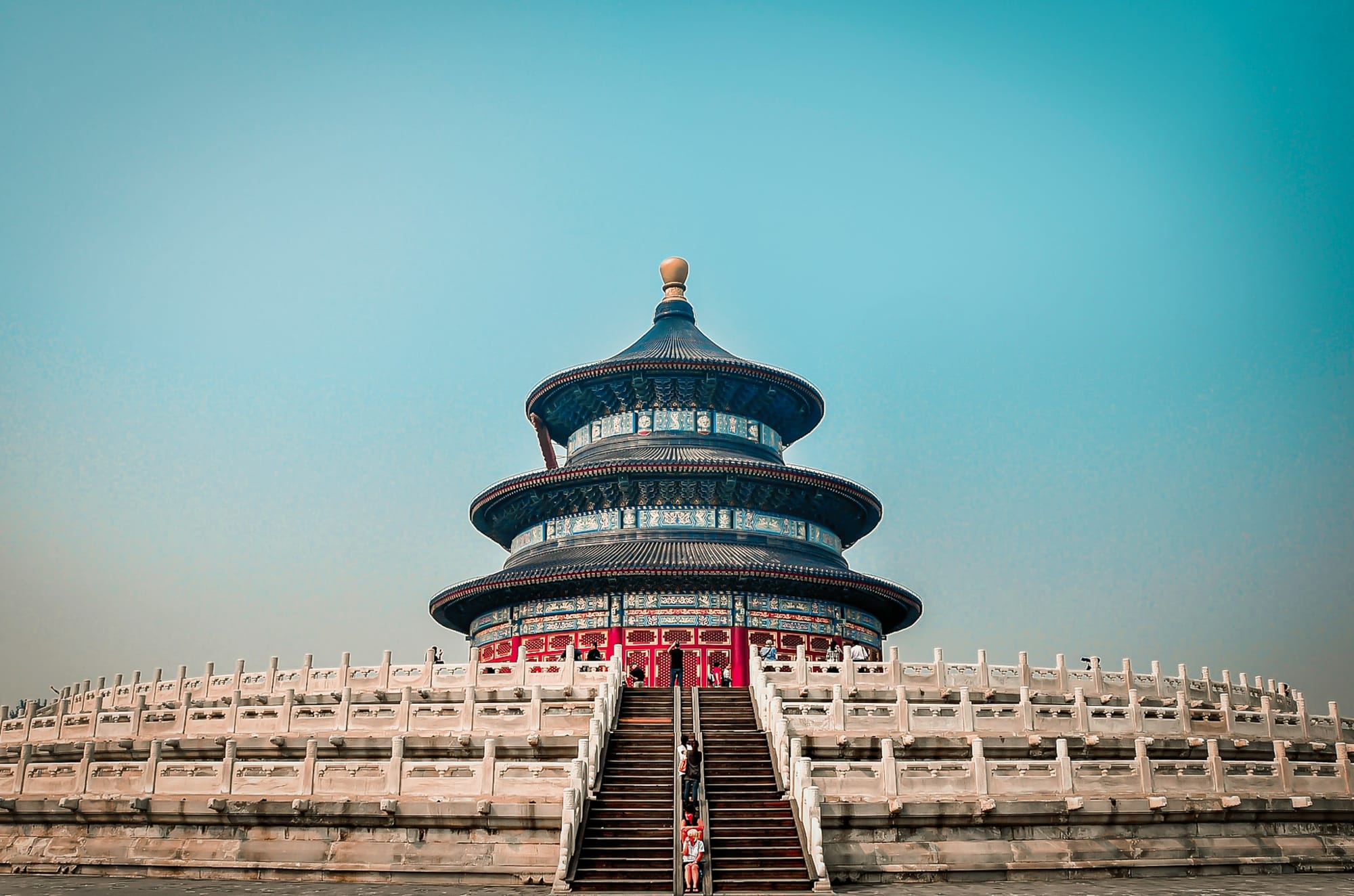
The common starting point for most China trips. As someone who grew up nearby, Beijing has always been a complex city. It is enormous, making travelling from A to B a hassle. When the smog comes, Beijing loses its colour and shine, and you can feel like you are walking in a grey-scale 3D world. But it also has its charm. The Forbidden City and Temple of Heaven, albeit touristy, show the kind of Chinese aesthetic in their architecture and remain a must-visit for many. On a clear day, when you can see the red walls against the blue sky, these places are full of charm and intrigue. The Great Wall sections at Mutianyu and Jinshanling offer very different experiences depending on how much walking you want, and it remains a bucket-list destination for many.
Beyond the headline sites, Beijing's charm lies in the small alleys, the hutongs, so simply enjoying a city walk, having a drink near the Houhai, and enjoying some of the daily tussles is a great way to experience the city.
Shanghai

China's most cosmopolitan city, and it can feel vastly different to Beijing. The Bund, the French Concession, and the Art Deco architecture of the 1930s sit alongside some of the most striking contemporary urban development in the world. But outside its iconic skyline and skyscrapers, there are many quiet places perfect for a slow afternoon. Visiting places like Jingan Road, with the impressive Jingan Temple and backstreet alleys, is a great way to see the slower Shanghai. And when you are hungry, stopping to have some Shengjianbao, or fried dumplings, is truly enjoyable.
Shanghai also functions as an excellent base for day trips — Suzhou and Hangzhou are both under an hour by high-speed rail.
Zhejiang

The province that contains Hangzhou, one of China's most celebrated classical cities. West Lake has been painted, written about, and photographed for centuries — and still manages to feel unhurried if you visit in the early morning. Beyond Hangzhou, Zhejiang holds some of the country's most scenic water towns (Wuzhen and Xitang among them) and the dramatic rocky islands of the Zhoushan archipelago. However, like many old towns in China, rapid commercialisation is making them all look and feel alike, and many now have a vibrant nightlife scene, a stark contrast to daytime.
Xi'an
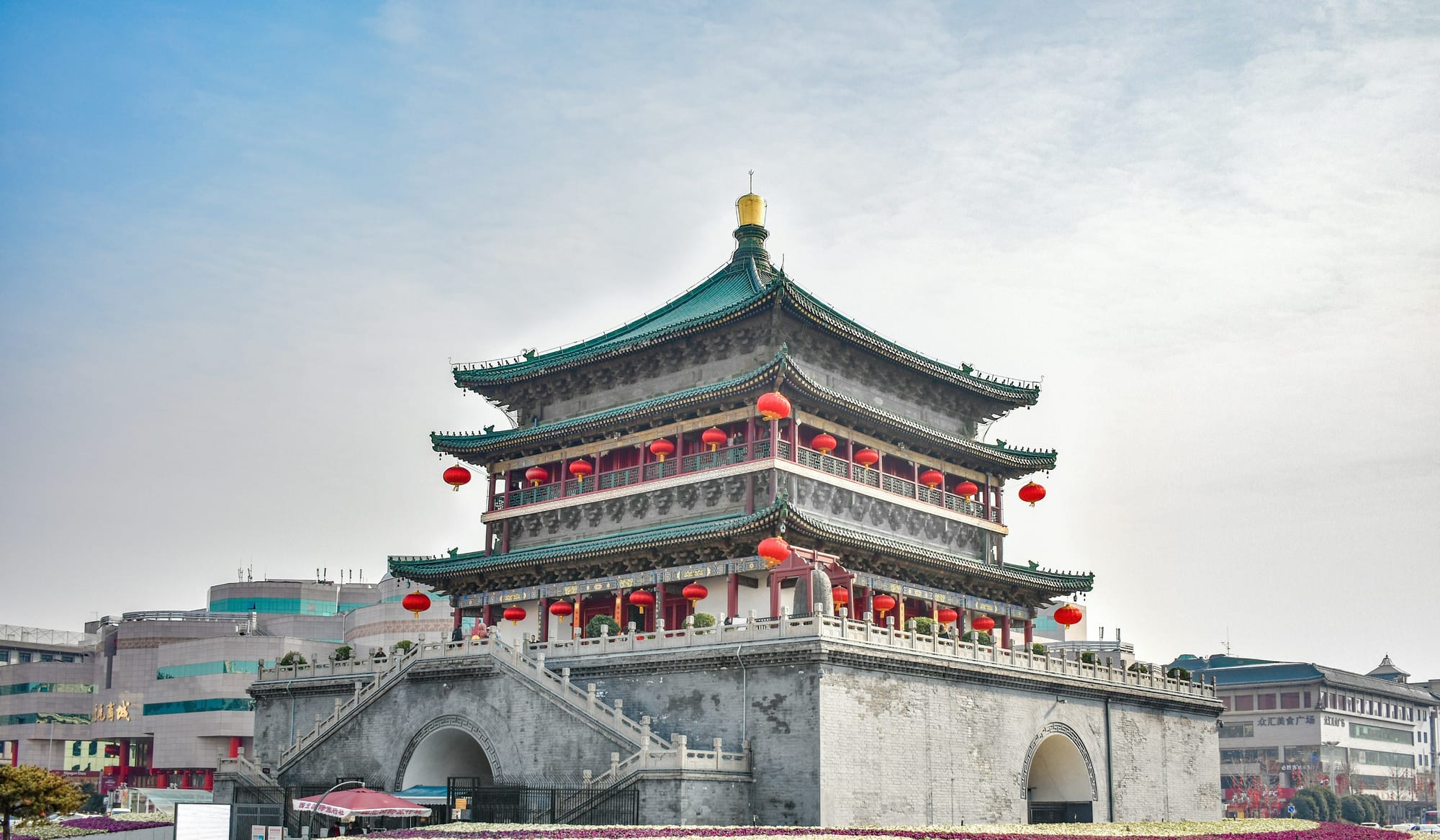
The eastern terminus of the ancient Silk Road and home to the Terracotta Army. The Muslim Quarter is one of China's best street-food neighbourhoods, and Xi'an local cuisine is now making a splash across London and Western dining scenes. Xi'an is also the gateway to Gansu and the wider northwest for travellers pushing further along the Silk Road.
Qinghai

Nestled on the north-eastern edge of the Tibetan Plateau, Qinghai is a land of snow-capped mountains, shimmering lakes, and rich cultural heritage. The province is twice the size of the UK. Our Qinghai snow leopard and wildlife safari is designed to showcase the diversity of plateau species, how they survive and thrive in some of the harshest habitats on Earth. On our safari, we will track the elusive snow leopards, lynx, pallas' cats, Tibetan fox, and many other bird and prey species.
Qinghai also offers a vibrant mosaic of cultures. Tibetan, Hui (Muslim), Mongol, and Han communities each contribute their own traditions, festivals, and flavours, which you will experience as you journey across the region.
Yunnan

Tucked into China's far southwest, Yunnan is the country's most biodiverse province and one of its most culturally complex. Snow-capped Meili Snow Mountain in the north gives way southward to subtropical forests and, eventually, lowland rainforest bordering Myanmar and Laos. The province's year-round spring-like climate in the central valleys makes it a reliable escape from both summer heat and winter cold elsewhere. For UK travellers, you'll see Chelsea Flower Show-level landscaping along the roadsides across many cities, notably the provincial capital, Kunming.
With 26 officially recognised ethnic groups, Yunnan is one of the most culturally diverse regions in China; each community has its own architecture, language, customs, and cuisines. Kunming, Lijiang and Dali are the well-known bases, but Yunnan's charm lies beyond these cities. The Nujiang Valley is home to the UNESCO Three Parallel River region, with fascinating Christian history, the Tibetan Yunnan to the North is home to sacred mountains and endemic alpine species, Jingmaishan and Pu'er to the South is famous for its eponymous teas (and is now increasingly becoming a coffee-growing region), and Gaoligong is home to China's rainforests. Our Yunnan Gaoligong safari will take you trekking through its rainforests in search of the Skywalker hoolock gibbons, hornbills, and a wealth of other local flora and fauna.
Guizhou
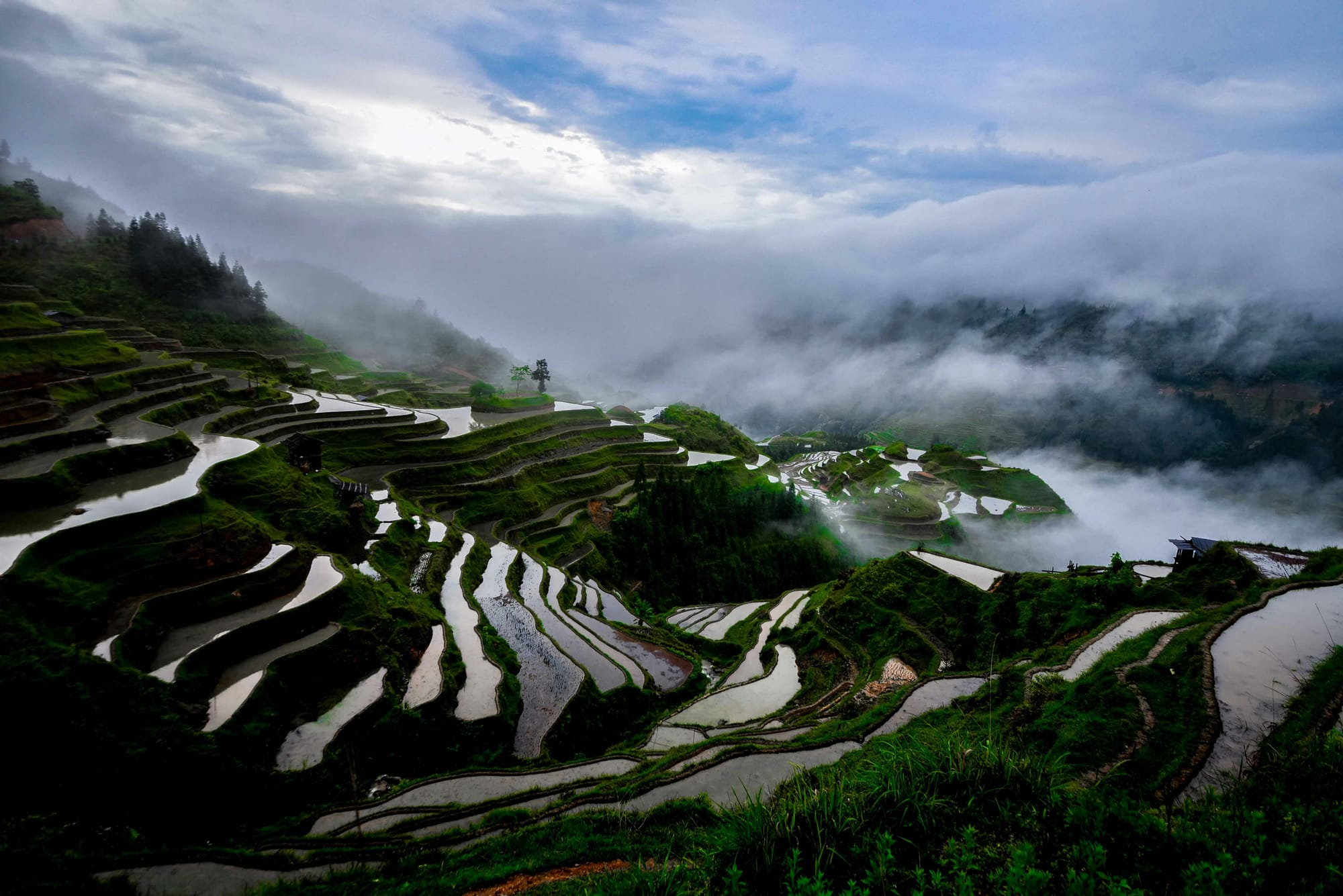
One of the least-visited provinces in China and arguably one of the most underrated. Guizhou's landscape is pure karst: limestone towers, dramatic gorges, and the country's most impressive waterfalls, including Huangguoshu — the largest in Asia. The province is also home to the densest concentration of ethnic minority villages in China. The Miao and Dong communities of southeast Guizhou maintain traditional architecture (multi-storey wooden stilt houses, covered wind-and-rain bridges) and textile traditions (silver jewellery, batik, intricate embroidery) that have changed relatively little over generations.
Guizhou is increasingly accessible from Guiyang, the provincial capital, which now has good high-speed rail connections to both Kunming and Chengdu.
Sichuan

Most visitors come through Chengdu, the provincial capital, or Chongqing, the cyber-punk city, and don't go further. That's understandable. Whilst Chongqing has a reputation for being a vertical city, Chengdu is known domestically for its slow pace of life and good food culture. The Giant Panda Breeding Research Base is a day trip away, and the conservation story of the Panda is one that reflects the success of a state-led approach with no effort spared.
To the north, Jiuzhaigou's turquoise lakes and waterfalls are a huge draw to tourists. Emei Mountain, combined with the Leshan Giant Buddha, can be done in two days from Chengdu. Further west, as the road climbs toward the Tibetan Plateau, the landscape shifts from grassland to high-alpine terrain. This western stretch — around Kangding, Litang, and the Garzê Tibetan Autonomous Prefecture — is remote, strikingly beautiful, and increasingly accessible, though mountain roads require experienced local drivers. Western Sichuan is wild and impressive, and we highly recommend including some nature in your Sichuan itinerary.
Gansu
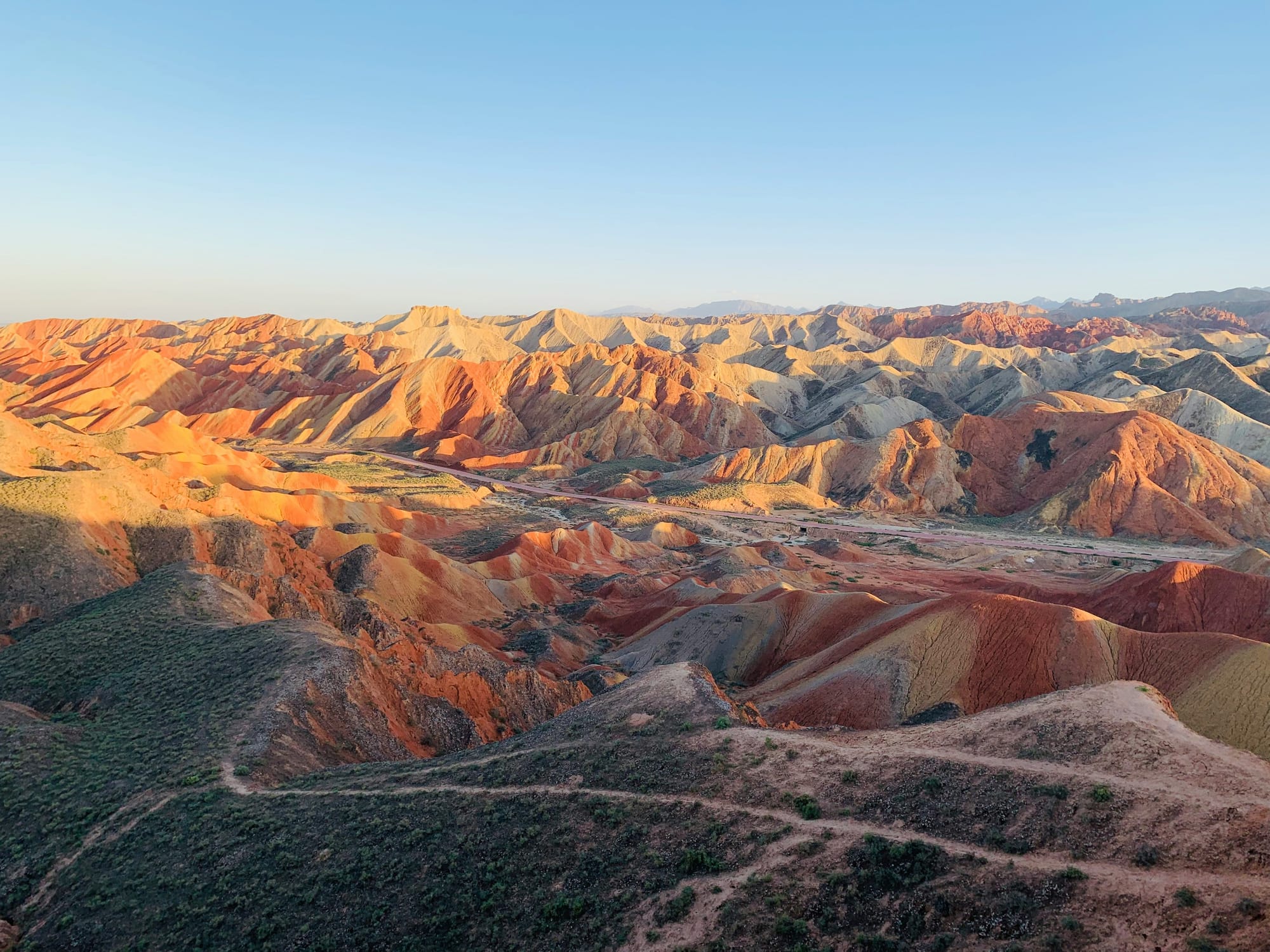
The province that strings the Silk Road together. Running northwest from Xi'an, Gansu connects the Yellow River heartland to Central Asia in one long corridor of desert, oasis, and mountain. The highlights are concentrated and spectacular: Zhangye's Danxia landforms (banded rainbow-coloured rock formations), the Dunhuang oasis and the Mogao Caves (one of the world's great repositories of Buddhist art, with cave paintings spanning ten dynasties), and the Jiayuguan fortress at the western end of the Great Wall.
For travellers drawn to the historical and cultural depth of the ancient Silk Road, a Gansu itinerary is among the most rewarding in China — and it connects naturally to Qinghai in the south or Xinjiang further northwest.
Anhui

Anhui is best known internationally for one thing: Huangshan, the Yellow Mountain, whose granite peaks, twisted pines, and sea of clouds have shaped Chinese landscape painting for a thousand years. The mountain rewards two days rather than one: the upper and western trail loops cover very different terrain, and the light changes the landscape entirely between dawn and dusk.
Below the mountain, the Huizhou villages of Hongcun and Xidi (both UNESCO-listed) offer a different kind of Anhui entirely: whitewashed walls, black-tiled roofs, and stone archways set against flooded rice paddies. Anhui connects easily to Shanghai by high-speed rail (under two hours to Huangshan North station), making it a natural addition to an eastern China itinerary.
How to plan your China trip
If you travel outside the major cities, English signs are hard to come by, and most locals don't speak English (some hardly speak Mandarin). The trip can be much more rewarding and meaningful by going with a guide. In the big cities, such as Beijing and Shanghai, guides are not as necessary.
Independent travel: works well for the major cities (Beijing, Shanghai, Xi'an, Chengdu) and for travellers who have visited the country before. It could be fun to mix some local activities, such as a street food tour in Chengdu. The Lonely Planet China Guide is a good starting point for travellers, but it is thin on regions beyond the well-trodden ones.
Tailor-made China travel packages: these are built around your specific interests, whether that's wildlife, history, food, or ethnic cultures, and offer local expertise with flexibility over itinerary. This is the format that makes the most sense for regions like Qinghai, Yunnan, Sichuan (outside big cities), Gansu, Anhui, where the trip will become much easier and meaningful with a guide. At Kodama Travel, our design is completely flexible - and we can personalise the tours around your independent travel days.
So ready to get on the road? You can check out more of our sample China itineraries, or contact us to get a free bespoke itinerary designed for you.
Please note that for some wildlife tours, you must go with a licensed guide or reputable tour operator. You also must join a licensed organised tour for any Tibetan trips (and Kodama can arrange this for you).