Travel guide: Iceland 🇮🇸
Iceland travel tips, including the best time to visit, where to go, wildlife highlights, the northern lights, and getting around.


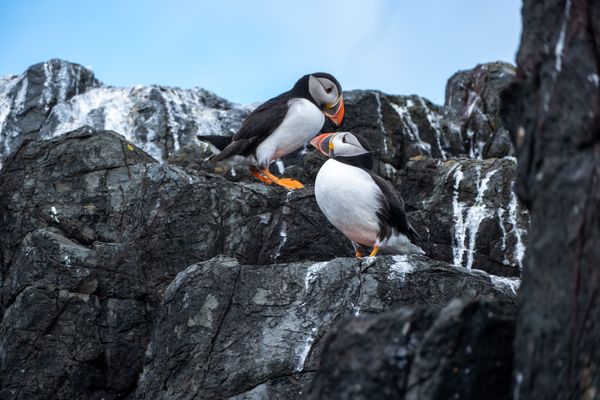
Iceland is a small country that demands more time than most people give it. The classic Ring Road circuit takes 7-10 days to do properly, and most first-time visitors underestimate driving distances between the dramatic set pieces — glaciers, geysers, black sand beaches, lava fields — that make this one of the most distinctive landscapes on Earth. It is also a great destination for wildlife: 60% of the global puffin population nests here, Húsavík is the whale-watching capital of Europe, and Arctic fox, reindeer, and seabirds are all within reach of the main routes. This guide covers what you need to know before you go. A Lonely Planet guide can come in handy to provide an overview of each region.
🗓️ Best time to visit
- Spring (April to May) is excellent for wildlife. Puffins arrive from late April and remain through early September. Whale-watching season opens in April, with humpbacks and minkes increasingly reliable as the month progresses. Crowds are smaller, and prices are lower than in summer.
- Summer (June to August) is peak season — and peak daylight. The midnight sun means near-continuous light at the solstice. This is the warmest and most accessible time for hiking, including in the Highlands, which are only open in summer. Accommodation books out early; plan ahead.
- Autumn (September to October) brings the first real chances of northern lights as darkness returns, alongside smaller crowds and changing colours across the lava fields and tundra.
- Winter (November to February) is northern lights season in earnest, alongside glacier hikes, ice cave tours (which are only accessible in winter when the ice stabilises), and snow-covered landscapes. Days are very short — around four to five hours of usable light in December — so plan your driving accordingly.
📍 Notable places to go
- Reykjavík is the world's northernmost capital. It is compact, walkable, and serves as a good base for day trips.
- The Golden Circle is Iceland's most popular day route from Reykjavík: Þingvellir National Park (where the North American and Eurasian tectonic plates meet), the Geysir geothermal area, and Gullfoss waterfall.
- The South Coast runs east from Reykjavík along the base of glaciers and volcanic plateaus, taking in Skógafoss and Seljalandsfoss waterfalls, Reynisfjara black sand beach, the Jökulsárlón glacier lagoon, and the Vatnajökull ice cap — Europe's largest glacier. This can be done as a day trip if you do not plan on self-driving.
- The Snæfellsnes Peninsula is often called Iceland in miniature — volcano, glacier, lava fields, fishing villages, and dramatic coastline in a compact loop. A strong alternative to the Golden Circle for those wanting something quieter.
- Húsavík, in the north, is the whale-watching capital of Europe. The season runs from April to November; summer is most reliable for multiple species, including humpbacks.
- The Westfjords are the least-visited and most remote region — spectacular for scenery, birdlife (Látrabjarg cliff is one of Europe's largest seabird colonies), and getting genuinely off the main routes.
- The Highlands (Landmannalaugar, Þórsmörk, Kjölur route) are only accessible in summer by 4WD or specific highland bus routes. Serious hiking country — rewarding but requiring preparation.
😎 Good things to know
🐋 Wildlife and nature
- Iceland is an exceptional wildlife destination, and it's worth building your itinerary around it rather than treating wildlife as an add-on. Puffins, whales, Arctic fox, and seabirds are all genuinely accessible without specialist equipment.
- Puffins nest in Iceland from late April to early September. Keep a respectful distance — they are ground-nesting birds and easily disturbed by people approaching too close. The same applies to other ground-nesting seabirds across coastal cliffs.
- Whale watching is best done from Húsavík or Dalvík in the north, or from Reykjavík for convenience. Choose operators that follow responsible wildlife guidelines and don't approach animals too closely.
- Reynisfjara black sand beach is beautiful and genuinely dangerous. Sneaker waves here have killed people who ignored the warning signs. Stay well back from the waterline.
🌌 Northern Lights
- Seeing the northern lights requires three things to align: solar activity, clear skies, and darkness. You cannot guarantee any of them.
- Cloud cover is the most common obstacle. Chasing the lights means being willing to drive — sometimes significantly — to find a clear sky. A professional guided tour improves your chances considerably, as guides monitor forecasts and know where to go.
🍽️ Food and drink
- Iceland is expensive. Eating out regularly will add up fast; self-catering from supermarkets (Bónus is the budget option) is worth considering for part of the trip.
- Tap water in Iceland is among the cleanest in the world — cold, straight from glacial sources. Never need to buy bottled water here.
🚗 Getting around
- Iceland is a driving country. The Ring Road (Route 1) circles the entire island and is the backbone of most itineraries. A standard 2WD car covers the Ring Road and most main attractions in summer. A 4WD is essential for any Highland route, and mandatory for many F-roads (marked with an F on the map).
- Driving distances are deceptive — what looks short on a map can take significantly longer on winding coastal roads. Build in more time than you think you need, especially in winter when daylight is limited.
- Winter driving requires experience and caution. Ice, snow, and sudden weather changes are common. Check road.is (the Icelandic Road and Coastal Administration site) before every drive — it gives real-time road conditions and closures.
- Petrol stations can be far apart outside the main routes. Don't let the tank drop below half when driving remotely.
Ready to head out? Check out Kodama Travel's Iceland Tours