Travel guide: Sabah, Borneo 🇲🇾
Most visitors come to Sabah in search of one elusive species - the orangutans. But Sabah is so much more than that. This guide covers the essentials: what to know before you arrive, where to go, and how to plan a Sabah/Borneo trip that does the place justice.


Most visitors come to Sabah in search of one elusive species - the orangutans. But Sabah is so much more than just. The state occupies the northern tip of Borneo, the world's third-largest island, and it covers terrain that ranges from lowland dipterocarp forest and mangrove rivers to the granite peaks of Kinabalu. It also borders one of Southeast Asia's most biodiverse marine zones. This guide covers the essentials: what to know before you arrive, where to go, and how to plan a Sabah/Borneo trip that does the place justice.
Good things to know before you go
Visas
Most nationalities can enter Malaysia visa-free for 90 days. As rules can change, check the latest requirements with the Malaysian Immigration Department before you travel. Sabah's capital, Kota Kinabalu, is conveniently connected with Kuala Lumpur through daily flights.
Currency and payments
The currency is the Malaysian Ringgit (MYR). Cash is widely used, especially outside Kota Kinabalu — markets, rural guesthouses, and small restaurants may not accept cards. ATMs are available in the city and most larger towns. Credit and debit cards are accepted at hotels, larger restaurants, and tourist operators in KK, but don't rely on card payment once you're in the field. Carry a reasonable amount of cash, particularly before heading into national parks or remote areas. You can easily draw cash from Kuala Lumpur or KK.
Getting a SIM card
Pick one up at the airport on arrival or from the 7-11 shops. Maxis and Celcom are the main networks. A local SIM with a data package is inexpensive and useful — some safari operators or drivers will want to call or message you directly, and a foreign number won't always receive local messages.
Ride hailing
Ride-hailing services here are mainly provided by Grab and work country-wide. They are much more reliable and economical than taxis, which can charge 10x more for short trips and often go without proper metering of the journey.
Getting around
Kota Kinabalu is the main entry point and transport hub for Sabah. From there, most wildlife destinations require either a guided transfer, a rental car, or another connecting flight. Internal flights connect KK to Sandakan on the east coast, which is the base for most orangutan and wildlife travel. Most travellers opt for guided tour packages for their Borneo journey.
When to go
The west coast (Kota Kinabalu, Kinabalu Park) has its driest months from March to September. The east coast (Kinabatangan, Sandakan, Danum) has a wetter climate year-round, with the heaviest rainfall typically between November and February. Rain in Borneo is rarely a trip-ruiner — showers are often short and intense — but flooding can affect river access on the Kinabatangan during peak wet season, so check conditions with operators in advance if travelling November–January. Unfortunately, due to climate change, the monsoon season has become irregular.
Avoid Malaysian school holidays and the Hari Raya period for popular sites, when accommodation books out and park quotas fill quickly.
Tipping
Not expected as a default, but appreciated. Guides and lodge staff who provide good service are worth tipping — these are skilled, specialist roles.
Regions: where to go in Sabah
Kota Kinabalu and the west coast
The state capital and the natural starting point for most trips. KK itself is a functional city rather than a destination — the waterfront is a nice place for sunset, but most visitors are through and onto the interior quickly. The offshore Tunku Abdul Rahman Marine Park is a short boat ride from the city and offers reasonable snorkelling.
Kinabalu Park and the highlands
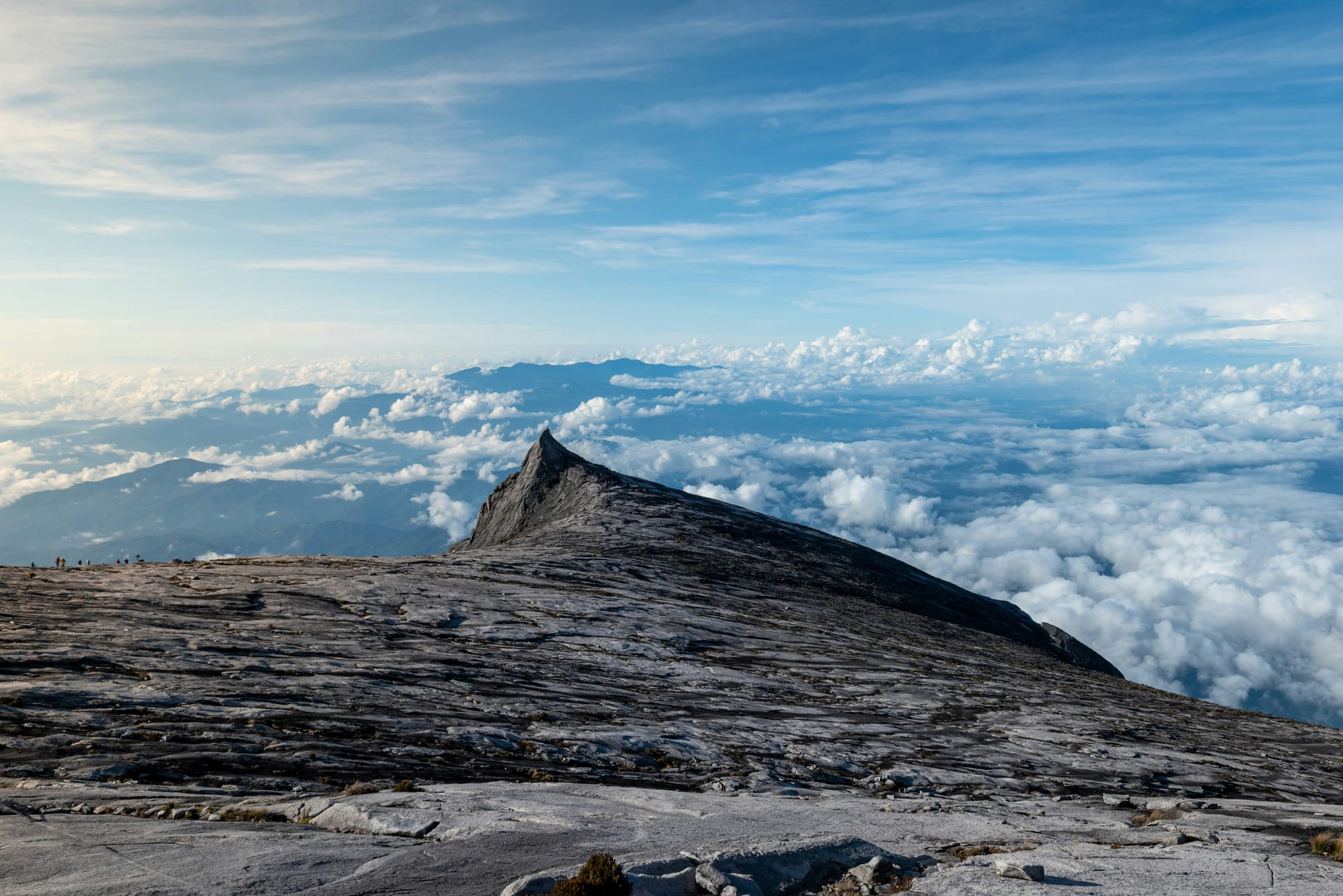
Mount Kinabalu is the highest peak in Southeast Asia outside the Himalayas, at 4,095m. The national park surrounding it is a UNESCO World Heritage Site and one of the world's most important centres of plant biodiversity, with more orchid species than Europe in its entirety. Climbing to the summit requires a permit (limited daily), overnight accommodation at Laban Rata, and a pre-booked guided ascent. Permits sell out months in advance during peak season; book early or engage an operator to handle logistics.
If a summit climb isn't the goal, the lower trails around park headquarters are still excellent — particularly for birders. The Kinabalu Giant Squirrel, various endemic babblers and bulbuls, and Bornean specialities like the Whitehead's Trogon and Bornean Treepie are all found here.
Kinabatangan River Cruise
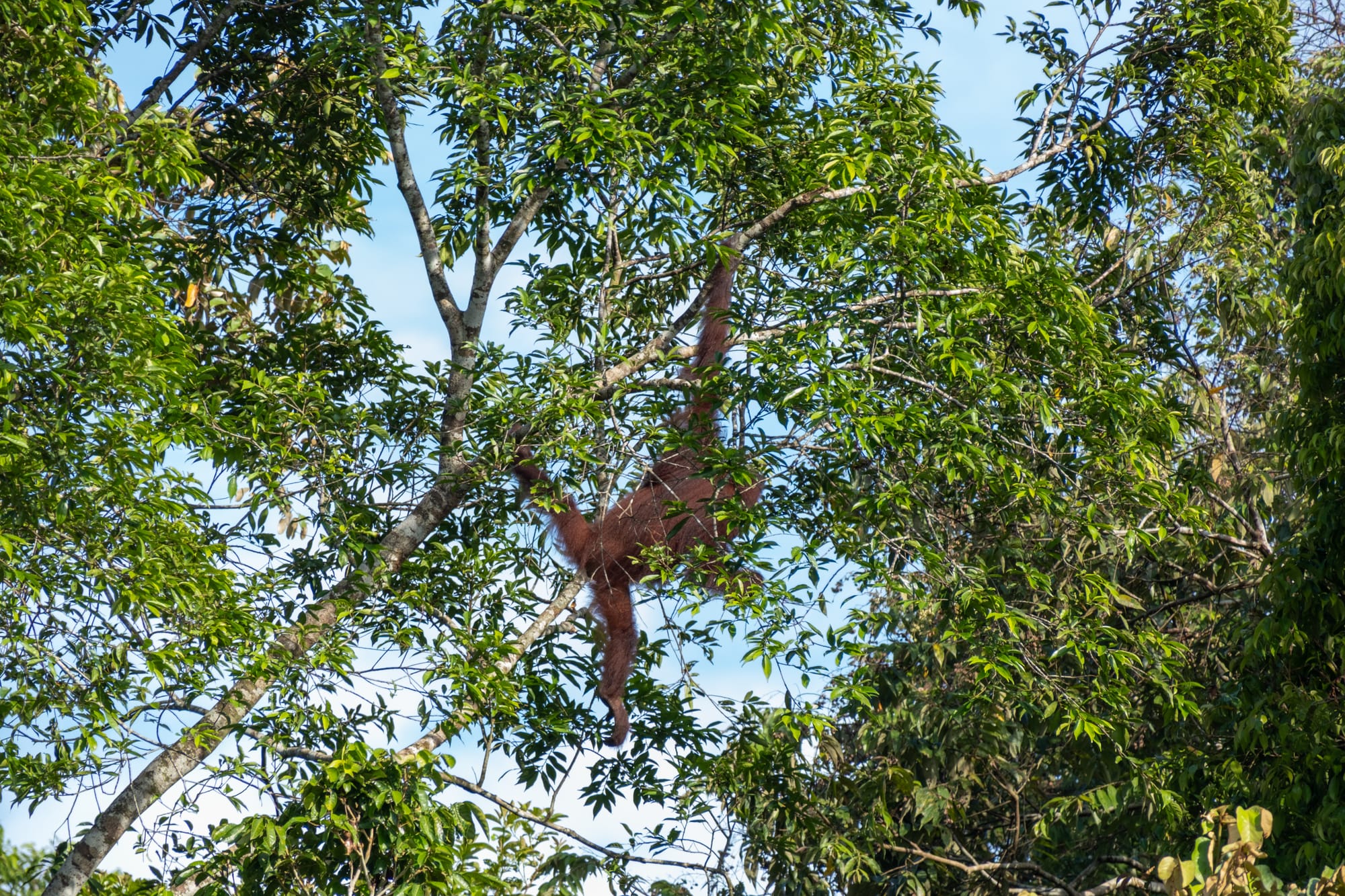
The Kinabatangan is Sabah's best-known wildlife corridor and one of the most accessible places in the world to see orangutans, proboscis monkeys, pygmy elephants, saltwater crocodiles, and multiple hornbill species from a boat. The river runs through a narrow strip of protected forest — much of the surrounding land is an oil palm plantation, which means wildlife is concentrated along the banks and sightings, particularly at dawn and dusk, are almost guaranteed.
However, due to its popularity, many who have no knowledge of wildlife welfare and ethical conduct are now becoming guides. They often get too close to the wildlife (when they are already trapped near the riverbank), and can shine a torch for far too long on animals during a night cruise. These establishments still get good reviews, as many rate them on wildlife sightings over conduct. We highly recommend every traveller to go to Kinabatangan with a reputable guide, who can manage the boat situation on your behalf, as many guides only speak broken English.
Danum Valley
A different experience from the Kinabatangan — quieter, more pristine, and more demanding. Danum Valley Conservation Area is one of the last significant intact lowland forest patches in Borneo. Access is through the Borneo Rainforest Lodge, which manages entry to the area. Sightings here can include clouded leopard, sun bear, orangutan, and a wide range of forest birds — but the forest is dense, and sightings require patience and a good guide.
Beluran Safari
Beluran Safari is a site in collaboration with a palm oil plantation, with the aim of preserving the surrounding forests. It is a vast forest, and is particularly good for mammal watching. It is also the only place where travellers can do both drives and cruises to see different animals. Past sightings include orangutans, leopard cats, flying squirrels, and a wide range of birds, including various hornbill and eagle species.
Tawau Hills
Tawau is often used as a connecting point to the nearby beach area of Semporna, but Tawau Hills National Park is actually an area of stunning primary rainforest with great wildlife. It is incredibly biodiversity-rich: the local NGO have recorded 338 species of birds, 109 species of mammals, 57 species of snakes, and 87 species of frogs. Past sightings include red leaf langur, gibbons, hornbills, kingfishers, cool insects, frogs, and snakes. It is a popular hiking trail among the locals, and there are many scenic spots to explore, such as the Former Tallest Tree Trail (home to a former tallest tropical tree), the Table Waterfall, and Galas Waterfall.
Wildlife and conservation
Sabah's wildlife is both its main draw and its central conservation challenge. Borneo has lost more than half its lowland forest in the last fifty years, largely to the expansion of oil palm. However, palm oil is also an efficient crop and a vital economic source for the locals. How you choose to experience wildlife in Sabah, and the operator you support, can have a direct bearing on what survives. A few principles worth keeping in mind:
Orangutans: The Sepilok Orangutan Rehabilitation Centre near Sandakan is the most visited facility in Sabah. It accepts orphaned and rescued orangutans and works toward releasing individuals into the wild. Viewing is at the feeding platforms at set times. It's a legitimate conservation operation, but the experience is managed and crowded. Seeing semi-wild orangutans along the Kinabatangan, by contrast, involves no infrastructure — just river, forest, and patience. Both are worth considering; they offer very different encounters. This comprehensive and customisable Sabah itinerary includes a visit to the Sepilok Centre.
Pygmy elephants: Borneo's pygmy elephants are found almost exclusively in Sabah's northeast, and the Kinabatangan is the most reliable place to see them. Do not approach on foot or request night boat trips that follow elephant herds — this is disruptive, even though some operators offer it to please the tourists.
Choosing operators: Sabah's tour operators vary in standards. For Kodama Travel's Borneo trips, we work with local NGOs and social enterprises, whose guides care deeply about animal welfare and wildlife conservation.
How to plan your Sabah trip
A workable structure for a first trip: check out our sample itinerary for a 6-day trip in Sabah.
Independent travel: Works well in KK, at Kinabalu Park, and if you rent a car on the west coast. For the East Coast wildlife sites — Kinabatangan, Danum, Tabin — guided packages are the practical and more rewarding option. Danum Valley requires booking through the lodge.
Guided packages: Particularly worth it for anyone prioritising wildlife. A good local naturalist guide will drastically change what you see and understand. Kodama works with specialist operators in Sabah —contact us for a tailored itinerary.
Climate and packing
Average daytime temperatures sit around 30–32°C year-round, with high humidity. Nights are warm (25°C or above at low elevation; considerably cooler on Kinabalu). Rain is possible on any day.
Clothing:
- Lightweight, quick-drying fabrics throughout
- Long sleeves and trousers for jungle trekking — sun, insects, and leeches
- Leech socks if you're doing trail walking (available in KK)
- A light waterproof jacket or rain poncho
- Warm layer for Kinabalu (temperatures drop sharply above 2,000m)
- Water shoes or sandals that you're comfortable getting muddy
Kit:
- Daypack with dry bag or waterproof liner
- Binoculars — essential if wildlife is a priority
- Camera with a weather-resistant case
- Reusable water bottle; many lodges have filtered water
- Personal medications and a basic first aid kit
- Travel insurance that covers medical evacuation — remote areas of Sabah are genuinely remote
Health: Follow current Malaysian travel health guidance for your country, including any vaccination recommendations. Malaria risk in Sabah is low in tourist areas but not zero in the interior — check current advice with a travel health clinic before departure.
Ready for your Borneo trip? Check out our Borneo itineraries and we'll see you in the jungle.